
Watch the full Knack 4 Business podcast featuring Dr. Jackie Kinley:
Recently, Dr. Jackie Kinley joined the Knack 4 Business podcast to discuss one of today’s biggest workplace challenges: why organizations continue to struggle with mental health despite investing more than ever before.
It’s a conversation that challenges many of the assumptions we’ve made about workplace wellbeing and offers a different way forward—one that focuses on building mental fitness rather than simply responding to mental illness.
The Problem Isn’t That People Are Weak
For years, conversations about workplace mental health have focused on what happens after someone begins to struggle.
An employee experiences burnout. Stress becomes overwhelming. Performance declines. A leave of absence follows.
While supporting individuals through these challenges is essential, it often overlooks an important question:
What created the conditions for burnout in the first place?
As Dr. Kinley explains, burnout is rarely just an individual issue. It reflects the environment people work within, the demands placed upon them, and the systems designed to support—or fail to support—them.
When organizations only respond after someone is already struggling, they remain caught in a cycle of reacting instead of preventing.
Building healthier workplaces means looking beyond the individual and asking how leadership, culture, and organizational systems can better prepare people to succeed.
Mental Health and Mental Fitness Are Different
One of the central themes of the conversation is the distinction between mental health and mental fitness.
Mental health care plays a vital role in diagnosing and treating illness. But treatment alone doesn’t necessarily prepare someone to navigate future stress, pressure, uncertainty, or change.
Mental fitness takes a different approach.
Rather than asking:
“How do we help people recover?”
It asks:
“How do we help people build the skills that allow them to stay well in the first place?”
Just as physical fitness prepares the body for physical demands, mental fitness strengthens the psychological skills that enable people to perform under pressure, regulate emotions, make sound decisions, and adapt to change.
This shift moves the conversation from reacting to illness toward proactively building resilience.
Leadership Has a Critical Role to Play
Organizations are not expected to diagnose or treat mental illness.
They are, however, responsible for creating workplaces where people have the greatest opportunity to succeed.
Leadership influences workloads.
Leadership shapes culture.
Leadership establishes expectations.
Leadership determines how people experience work every day.
When leaders understand that resilience can be developed—not simply expected—they can begin creating environments that strengthen people instead of unintentionally exhausting them.
Investing in mental fitness isn’t simply an employee wellbeing initiative.
It’s a leadership strategy that supports healthier people, stronger teams, and more sustainable organizational performance.
Some Workplace Hazards Can’t Be Seen
Most organizations have well-established systems for identifying physical hazards.
Increasingly, we’re recognizing that workplaces also contain psychosocial hazards—factors such as excessive workload, poor communication, lack of role clarity, interpersonal conflict, and chronic stress.
Unlike physical hazards, these risks are often invisible.
That doesn’t make them any less significant.
Recognizing psychosocial hazards is only one part of the solution.
Organizations also need to equip people with the psychological skills required to navigate complex environments confidently and effectively.
Building individual capability while improving organizational systems creates a stronger foundation for both wellbeing and performance.
Resilience Is a Skill Set
Perhaps the most important takeaway from the conversation is that resilience isn’t something people either have or don’t have.
It isn’t simply positive thinking.
It isn’t a personality trait.
It isn’t reserved for a select few.
Resilience is a collection of learnable psychological skills that can be strengthened through intentional practice.
Just as muscles become stronger through consistent training, psychological strength develops through repeated application of practical mental fitness skills.
When individuals strengthen those skills, they’re better equipped to manage stress, adapt to change, navigate uncertainty, and perform at their best—even in demanding environments.
Looking Ahead
The future of workplace mental health isn’t about replacing treatment.
It’s about recognizing that prevention, skill development, and leadership all have an equally important role to play.
Organizations that invest in building mental fitness aren’t simply responding to challenges more effectively—they’re creating workplaces where people are better prepared to meet them.
As conversations around psychological health continue to evolve, moving beyond labels and toward capability may be one of the most important shifts leaders can make.
Watch the Full Conversation
If you’d like to hear the full discussion, including insights on burnout, leadership, psychosocial hazards, resilience, and building mentally fit workplaces, watch Dr. Jackie Kinley’s conversation on the Knack 4 Business podcast.
Watch the full episode here:
- Building Organizational Resilience: Lessons from a Three-Year Partnership
- Why High Performers Burn Out: The Hidden Role of Recovery

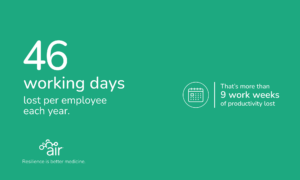
- 46 Lost Working Days Per Employee: The Hidden Cost of Mental Fatigue
- Leadership, Not Labels: Rethinking Workplace Mental Health

- AI Anxiety in the Workplace: Why Uncertainty Is the Real Challenge

- How UPEI Built a Culture of Mental Fitness